
If your toilet bowl refills to an apparently normal level and then loses standing water, the cause is usually not a simple tank adjustment. The pattern can come from slow evaporation in a rarely used bathroom, material in the trapway that draws water away, a drain or vent pressure problem that siphons the bowl, or damage that lets water escape from the porcelain.
The timing and surrounding clues matter. A drop over several quiet days is different from a drop that happens within minutes, after a nearby shower drains, or alongside gurgling and sewer odor. The tank level, visible moisture, and behavior of other drains can also help a plumber choose the right inspection path.
Avoid repeated test flushing, chemical drain cleaner, tank adjustments, toilet removal, or roof-level vent checks. Those actions can create an overflow, damage components, expose you to wastewater, or hide the original pattern. If the water falls rapidly, a crack or moisture is visible, sewage backs up, or sewer odor persists, stop using the fixture and arrange toilet repair in Los Angeles.
Why Standing Water Belongs in the Toilet Bowl
The curved internal trapway in a toilet holds water after each flush. That standing water forms a trap seal between the bathroom and the drainage system. The bowl is designed to settle at a repeatable level based on the fixture’s shape after the flush and refill cycle ends.
A small change immediately after water stops flowing can be part of the normal settling process. A level that continues falling well below its usual line is different. It means water is evaporating, being drawn through the trapway, being displaced by pressure in the drainage system, or escaping through a damaged part of the bowl.
An unusually low trap seal may allow sewer odor into the room. The odor does not identify the cause by itself. It may accompany water loss from the bowl, a drain or vent problem, or a separate sealing issue around the fixture. Treat it as a reason to limit use and have the condition inspected, especially when the odor returns after the room has been aired out.
First Confirm Whether the Tank or the Bowl Is Changing
The tank and bowl are connected during a flush, but they do not store water for the same purpose. The tank supplies water for the next flush. The bowl holds the trap seal. Separating their behavior prevents a tank-refill problem from being confused with water that disappears after the bowl has already filled.
Wait for the ordinary refill sound to stop once; do not keep flushing as a test. Note the bowl level with a photograph taken from the same angle. If the tank can be viewed safely without touching or moving any components, observe whether it remains at its usual stable waterline while the bowl falls. Skip that step if the tank lid is difficult to handle or the parts are not readily visible.
When the tank stays full but the bowl level falls
A stable tank with a bowl that reaches its usual line and then drops shifts attention toward the bowl, trapway, drain, venting, or a leak. It makes a simple tank-level adjustment less likely, but it does not prove a particular cause.
When the bowl never reaches its usual level
If the bowl starts low as soon as the refill cycle ends, the refill path may not be supplying the expected amount of water. That is a different pattern from a bowl that fills and then drains down. Record what you see without bending, repositioning, or adjusting parts inside the tank.
When both levels appear to change
Water loss from both the tank and bowl calls for a broader toilet inspection. The tank may have its own leak or refill issue while the bowl has a separate symptom. Do not assume one repair explains both until the water paths are checked.
Gradual Evaporation Can Lower Water in a Rarely Used Toilet
Water naturally evaporates from an open bowl. The change is usually gradual and is more noticeable in a guest bathroom, vacant unit, or another fixture that goes unused for an extended period. Warm, dry air and airflow through the room can increase evaporation.
Evaporation is more plausible when the level changes slowly over days, the toilet works normally when used, no other drain gurgles, no sewer odor persists, and there is no visible moisture or staining. Even then, do not use evaporation to explain a sudden drop or a level that falls repeatedly soon after each refill.
Record the date and bowl level, then check it later without flushing in between. A photograph provides a safer comparison than drawing on the porcelain or repeatedly operating the toilet. If the water falls noticeably in minutes or hours, or the same pattern occurs in a regularly used bathroom, another cause deserves attention.
A Partial Trapway Obstruction Can Draw Water Out
A toilet can still flush while material remains partly caught in its internal trapway. Fibrous material, string, fabric, or another foreign object can bridge part of the water path. In some cases, that material acts like a wick and slowly draws water over the trap’s high point after the bowl has refilled.
The bowl may fall to a similar low level after each cycle. A weaker flush, a change in the sound of the flush, intermittent gurgling, or a recent incident involving an item entering the toilet can support this branch. None of those signs proves where the material is located.
Do not reach into the trapway, insert improvised tools, or repeatedly flush to force an unknown object through. A hard object can become lodged farther into the fixture, and extra flushing can cause an overflow if the restriction worsens. Chemical drain cleaner is also a poor diagnostic tool: it may remain in the bowl or drain, expose anyone who later works on the fixture, and will not remove many foreign objects.
A plumber can determine whether the restriction is within the toilet or farther into the drain and choose equipment suited to that location. If other fixtures drain normally and the symptom is isolated to one toilet, a fixture-level inspection may come first. If several drains are affected, the drain system needs broader evaluation.
Drain or Vent Pressure Can Siphon the Bowl
Plumbing vents allow air to move as wastewater travels through drainpipes. When airflow is restricted or a drain develops a problem, pressure changes can pull or push at fixture trap seals. A toilet bowl may lose water when another fixture drains, even though the toilet itself was not flushed at that moment.
Notice whether the level changes after ordinary use of a nearby shower, tub, sink, washing machine, or another toilet. Listen for gurgling without creating a special stress test. A bubble or brief sound alone is not a diagnosis, but repeated timing between fixture use and bowl-water loss is valuable evidence.
Multiple slow drains, several gurgling fixtures, sewer odor in more than one room, or water moving in the bowl when another fixture operates increases the need for a drain-system assessment. The issue may be close to the bathroom, in a branch line, or elsewhere in the system. The observed symptoms cannot locate it by themselves.
Do not climb onto the roof, open a vent, or pour water or chemicals into a vent pipe. Roof access adds fall risk, and an unverified blockage can be pushed into a less accessible part of the system. A professional can evaluate venting and drainage from suitable access points and determine whether drain cleaning or a more focused correction is appropriate.
A Damaged or Leaking Bowl Can Lose Water
Porcelain damage below the bowl’s standing-water line can allow water to escape instead of passing through the trapway. A crack may be visible, but it can also be fine, concealed by the fixture shape, or located where moisture travels beneath the toilet rather than across the bathroom floor.
Look without moving the toilet. New moisture around the base, recurring dampness after the area is dried, discoloration in flooring, staining on the ceiling below, or a visible line in the porcelain requires prompt attention. Do not sit on, rock, or continue using a visibly cracked fixture. Porcelain can fail suddenly and create sharp edges as well as water damage.
Moisture at the base does not prove the bowl itself is cracked. A supply connection, tank component, drain seal, condensation, or nearby plumbing source may be involved. Likewise, a compromised base seal usually does not explain standing water disappearing from inside the bowl because the bowl’s trap holds that water above the floor connection. Two problems can exist at the same time, so both the water-level pattern and visible leak need to be traced.
When the source is not obvious, leak detection can help separate the toilet from nearby water sources before damage spreads.
Safe Observations to Make Before Service
You can document the condition without adjusting or dismantling anything:
- Take a photograph when the refill cycle has stopped and another from the same angle later.
- Note whether the change takes minutes, hours, or several days.
- Record whether the toilet is used daily or only occasionally.
- Observe whether the tank remains at its usual level without touching its components.
- Note whether ordinary use of a nearby sink, shower, tub, washing machine, or toilet precedes the drop.
- Listen for gurgling or bubbling and note whether it comes from one fixture or several.
- Record any persistent sewer-like odor and whether it returns after ventilation.
- Look for moisture, mineral residue, staining, softened flooring, or ceiling marks below the bathroom.
- Note whether other toilets have low bowl water or whether other drains are slow or backing up.
- Tell the plumber about any object that may have entered the toilet, recent drain work, fixture impact, or plumbing work.
Do not remove tank parts, alter the fill level, probe the trapway, loosen the toilet, or open a drain or vent. If one careful observation already shows a rapid drop, visible damage, or a broader drainage problem, further testing is unnecessary.
Multiple slow or noisy fixtures suggest the problem may extend beyond one toilet. Avoid adding more wastewater to a system that is backing up. A sewer repair evaluation may be appropriate if inspection finds a damaged sewer line; symptoms alone do not establish that repair.
When to Stop Using the Toilet
Take the toilet out of use and arrange prompt inspection when:
- A crack is visible in the bowl, base, or trapway area.
- Water appears at the base or in the room below.
- The bowl loses most of its standing water soon after refilling.
- Sewer odor remains or repeatedly returns.
- Wastewater backs up into the toilet, tub, or shower.
- Several drains become slow, noisy, or affected at once.
- Flushing causes the bowl to rise unusually high or approach overflow.
- Flooring feels soft, unstable, or newly discolored.
Use another bathroom if one is available. Do not add chemical cleaner to a toilet that may need to be handled or removed, and tell the plumber if any product was already used.
What a Plumber Checks
A focused diagnosis begins by confirming the sequence: how high the bowl refills, how quickly it falls, where it stops, whether the tank remains stable, and whether other fixtures affect it. That distinction prevents unnecessary tank adjustments when water is leaving after the refill is complete.
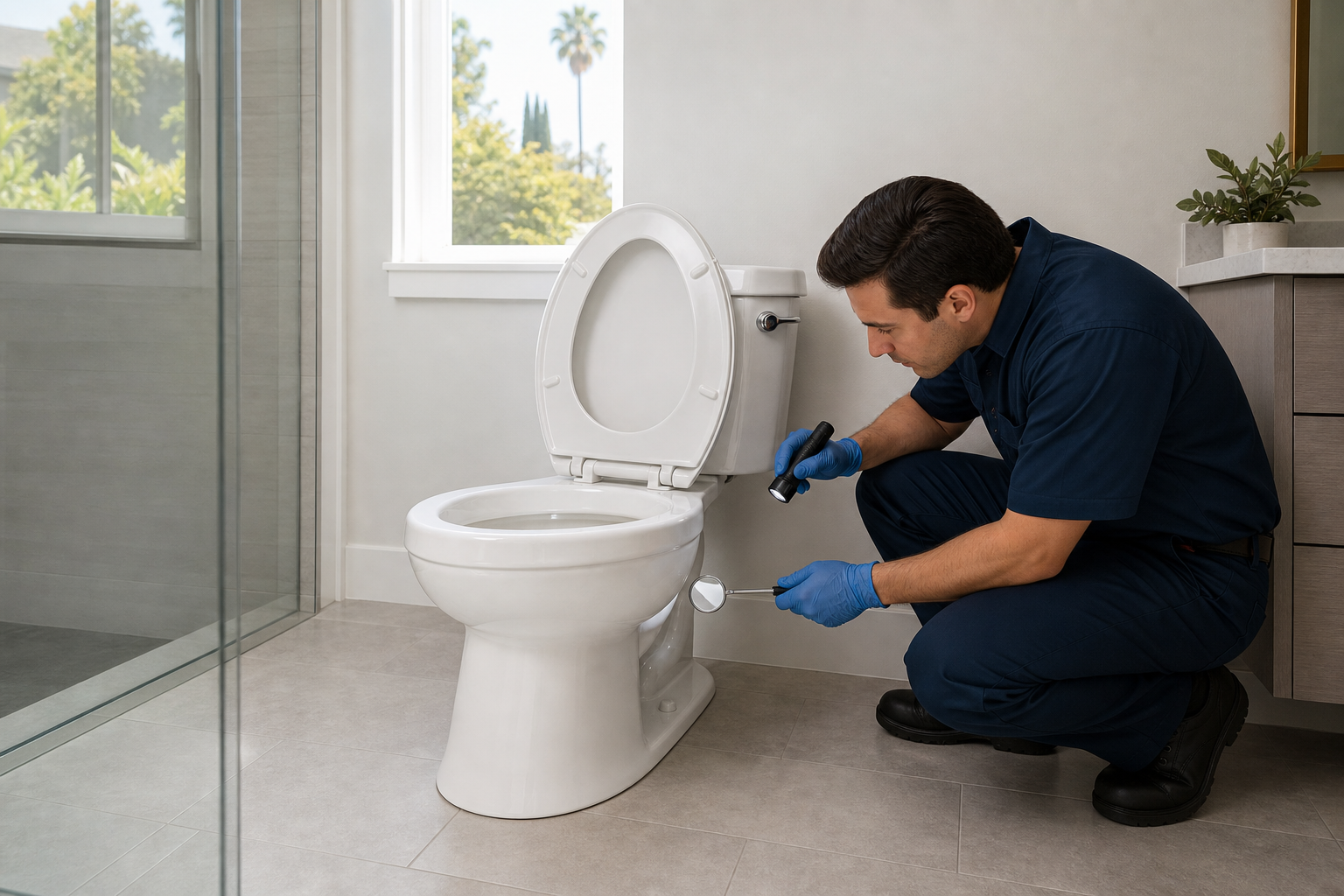
The plumber can then inspect the visible porcelain and surrounding surfaces, evaluate the toilet’s flush and refill behavior once it is safe to do so, and check for evidence of a trapway restriction. Drain and vent behavior can be assessed when gurgling, nearby-fixture timing, sewer odor, or multiple affected drains points beyond the toilet.
If moisture suggests leakage, the inspection should trace the source rather than assume the bowl is cracked. The tank, supply connection, porcelain, base area, floor, and room below may need separate checks. Toilet removal is reserved for a professional inspection when the hidden outlet, seal, or fixture underside must be evaluated.
The resulting repair may involve clearing a fixture-level obstruction, correcting a drain or vent problem, repairing another leak source, or replacing damaged porcelain. The right response depends on the confirmed failure; a tank adjustment, chemical treatment, or automatic sewer-line repair is not a substitute for diagnosis.
Arrange Focused Toilet Repair in Los Angeles
A bowl that fills and then loses water is giving you a useful diagnostic pattern. The safest next step is to preserve that pattern, note the timing and related symptoms, and avoid actions that can overflow the fixture or obscure the cause.
MAP Plumbing and Rooter can compare the tank and bowl behavior, evaluate the trapway, check relevant drain and vent conditions, and look for a concealed toilet leak. Contact MAP Plumbing and Rooter when the bowl level keeps dropping, sewer odor appears, moisture is visible, or other fixtures begin showing drainage symptoms.
Frequently Asked Questions
Why does my toilet bowl fill normally and then slowly drain down?
The main possibilities are evaporation, material wicking water through a partial trapway obstruction, pressure-related siphoning through the drain system, or a leak from damaged porcelain. Timing and related symptoms help narrow the inspection, but the water level alone does not prove which cause is present.
Can a fill valve make the bowl water level drop?
A refill problem can leave the bowl too low from the start. If the bowl clearly reaches its usual level and then falls after the refill cycle ends, a simple fill adjustment is less likely to explain the loss. Avoid changing tank settings until both stages are observed.
Why does the toilet gurgle and lose water when the shower drains?
That timing can indicate pressure changes related to a drain or vent condition. It does not show where the restriction or vent problem is located. Record which fixtures are involved and whether other drains are slow, then arrange an assessment without deliberately repeating the event.
Can a partial clog lower the water in the bowl without stopping the toilet from flushing?
Yes. Material caught in the trapway can sometimes let the toilet operate while drawing water away afterward. Avoid probing, repeated flushing, or chemical drain cleaner because the obstruction may move, worsen, or expose the plumber to chemicals.
Is a low toilet-bowl water level dangerous?
The low level itself is a symptom, but a reduced trap seal may allow sewer odor into the room. A crack, wastewater backup, active leak, or softened floor adds a more immediate concern. Stop using the fixture when those signs are present.
Does water at the toilet base mean the bowl is cracked?
Not necessarily. The source could be the bowl, tank, supply connection, drain seal, condensation, or nearby plumbing. Stop using the fixture if moisture returns and have the source traced rather than assuming one part needs replacement.